
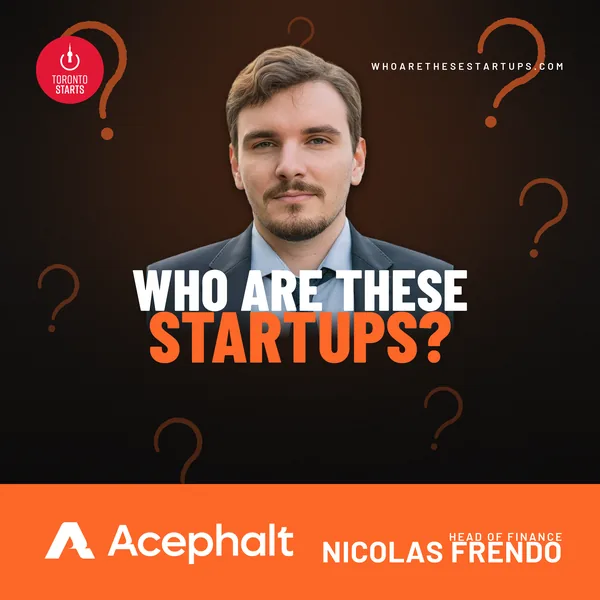
Nicolas Frendo of Acephalt: Same-Day Due Diligence Models for Private Equity
Nicolas Frendo, Head of Finance at Acephalt, says private equity teams can get quality of earnings work, lender briefs, and LBO models the same day, traced back to a source of truth, instead of waiting about six weeks and paying around $100,000 at a firm like EY. On this episode of Who Are These…
Listen to the episode
Watch the interview


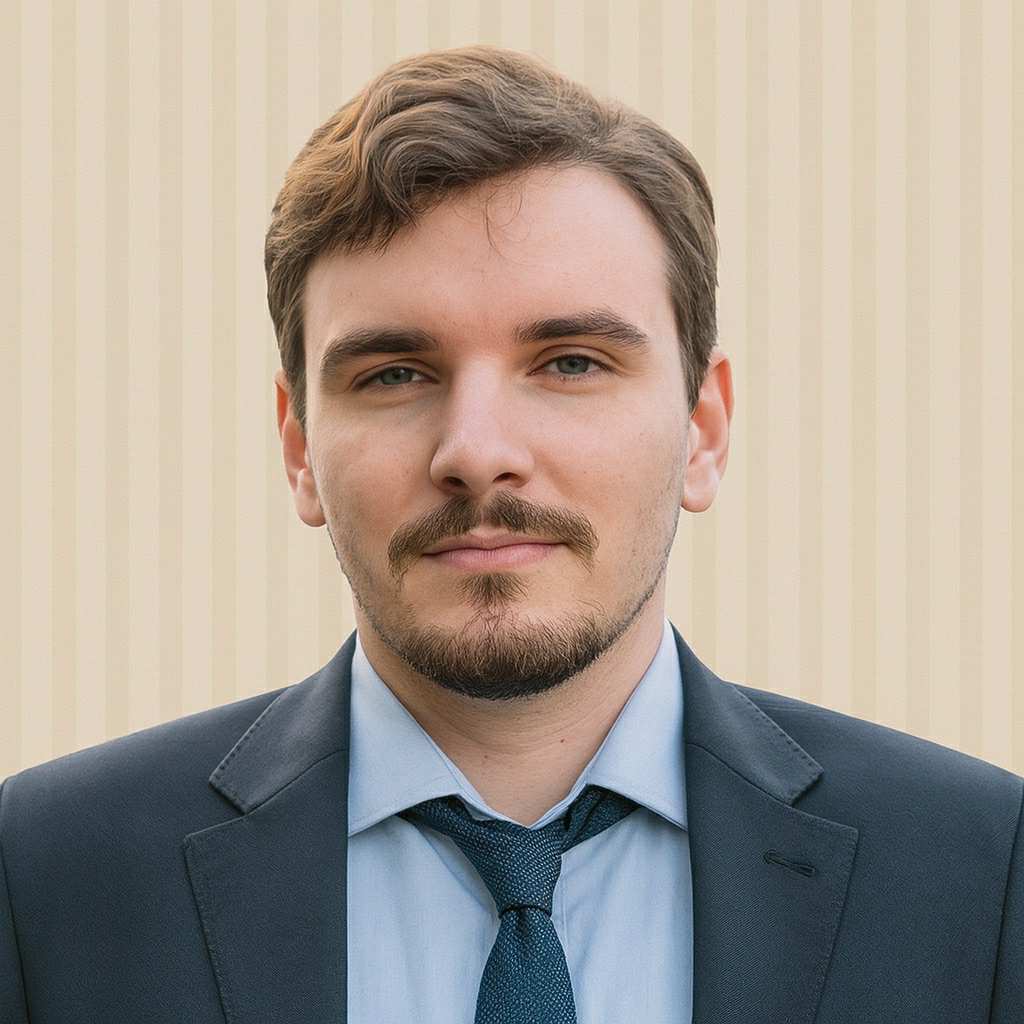
Meet Nicolas Frendo
Acephalt
Nicolas Frendo is Head of Finance at Acephalt. He started in data, moved into asset pricing, and completed a master's in finance before joining the company. Acephalt typically operates out of Toronto. In his words, Acephalt has developed an Excel financial modeling platform used by private equity firms to build quality of earnings (QoE) analyses, LBOs, lender briefs, and more in a matter of days.
Nicolas Frendo, Head of Finance at Acephalt, says private equity teams can get quality of earnings work, lender briefs, and LBO models the same day, traced back to a source of truth, instead of waiting about six weeks and paying around $100,000 at a firm like EY. On this episode of Who Are These Startups, Nicolas explains who Acephalt is built for, how the company found a fit in private equity, and why he says selling into that market takes months of relationship building, not a first-call close.
He also talks about going from data work and asset pricing into the finance seat, what founders get wrong about their financial model when they raise in Canada versus San Francisco, the Canadian programs he has found useful, and the Canadian companies he is watching.
Plus: how Acephalt got its name so it would go first in pitch competitions, why he now sees sales as the hardest part of an early-stage company, and where to find him.
In this episode
- What Acephalt does, and who it is for
- How the company got its name
- From data work and asset pricing to Head of Finance
- What a Head of Finance does at a startup that sells to finance teams
- Getting deal teams to trust models built with AI
- Selling to private equity, funding, and runway
- What founders get wrong about their financial model when they raise
- Lessons from an early-stage company, and the AI tools he uses
- Canadian startup resources, and Canadian companies to watch
Nicolas shares
- In his research, Nicolas has seen only 5% of private equity globally using AI daily, and about 14% of real estate.
- He says Instinct was valued at $100 million a year ago, is valued at $30 billion today, and has zero revenue right now.
- He says Toronto has the most accelerators of any city in the world.
- He says Xanadu's IPO was the first venture-backed IPO on the TSX in five years, and that when it IPO'd it was the only company doing end-to-end photonics in the world, though he notes that may have changed.
- He says Cohere and Xanadu are on the Toronto Stock Exchange, and that Mark Carney just put $1.6 billion of Canadian taxpayer money into Cohere.
- He says turbopuffer was backed by Jared Kushner's fund or his brother's fund, that Anthropic and Cursor use it, that he thinks it is already valued over a billion dollars, and that it started about a year ago.
- He says BDC is a good place to look for grants, that Acephalt does not use BDC, and that BDC is merging with EDC, so there could be more grants coming. He also says the liability on that kind of loan is usually personal, not on the company.
- He says Travis Kalanick rolled up his companies, renamed them Adams, and he thinks that raised a few billion dollars.
- He also points to Slack, Substack, and Lululemon as Canadian companies a lot of people do not realize are Canadian.
Links
[0:00] Who Are These Startups: Welcome to Who Are These Startups podcast shorts featuring founder interviews of Canadian startups.
[0:10] Craig Major: Welcome back to Who Are These Startups? I'm Craig Major, the startup coach and founder of TorontoStarts. My guest today is Nicolas Frendo, head of finance at Acephalt. Acephalt is a Toronto company that builds financial modeling and due diligence tools for private equity firms and other investors. Nicolas, welcome to the show.
[0:29] Nicolas Frendo: Thanks, Craig. Yeah, it's awesome to be here.
[0:32] Craig Major: So let's jump right in with what does Acephalt do in plain terms?
[0:37] Nicolas Frendo: Yeah, in layman's terms, we have the best Excel model in the world, and private equity uses it a lot before they go to do their acquisitions instead of having to pay so much to go to EY and do their due diligence. So before private equity companies, they need to do things, certain things for due diligence, like quality of earnings, lender briefs, if they're. looking to get private credit. And LBOs are very popular as well. Leverage models. And there's a couple other things as well, acquisition models, etc.
But something like equality of earnings from EY costs about $100,000. If you use our platform, we can get it to you day of. And it's a lot less than $100,000. I can tell you that. So EY is six weeks, $100,000. We are a lot less money than that and we get to day of. Everything is also traced back to a source of truth. So there's no hallucination.
[1:28] Craig Major: As an ex-deloiter, I definitely understand how these kind of companies overcharge and I'll happily share stories off the podcast because this isn't about me, it's about you. So who is Acephalt for?
[1:41] Nicolas Frendo: Acephalt is for private equity. We do work with some venture capital firms as well, but our clientele is private equity and independent sponsors.
[1:51] Craig Major: So So you mentioned, because I was asking about the name, where does Acephalt come from?
[1:57] Nicolas Frendo: Yeah. So when we were picking a name about a year ago we were doing a lot of pitch competitions and statistically it's shown that the company that goes first usually does The best, not Uh, all the time, but just statistically and I mean, you find companies that go first in pitch competitions usually get the most attention as people are just sitting down there just, you know, they get a little bored as things go on. So we chose, we wanted something with A and then we wanted something so we'd always go first. And then we wanted something with B or C next to it.
So we chose AC as in like, you know, ace, And then fault as in like. We thought it kind of sounded well and the most important part was the ace part, so we went first in pitch competitions.
[2:46] Craig Major: That sounds like the old phone. Book trick. When I went to college, I did things to make money, hosted events at bars, and I named my company Absolute Entertainment for that exact reason. A.B., right at the beginning of the phone book. when people are like that. It's just funny how it just transitions across the Web to pitch competitions to to whatever you're doing. So the next one here, how did you go? How did you get here? Going from data to asset pricing to finance and then the Acephalt.
[3:20] Nicolas Frendo: So after getting my bachelor's degree, which was in business law. I had two choices. It was go do your LSAT and then go into law, which was kind of my first choice. But I decided, you know, I'll wait a year, I'll look at the market, maybe get a job. So I got a job just kind of well hanging fruit in data entry. This was kind of before AI era as well. It was, data entry entry. And then I moved into kind of data analytics near the end there. And then I moved into asset pricing.
And then I did my masters. I actually decided not to do law school. I decided to do a masters instead. And my masters was all surrounding asset pricing. I also worked within distressed assets and asset pricing as well. Um, but my, my master's was around basically how do you asset price things with no value, such as things such as gold, blockchain. and why are people buying things that technically they can't use every day to have no inherent value to them? Like for example, like coffee beans, I, I need coffee beans every morning because I like to drink coffee, and it it wakes me up.
Gold. what do I use gold for? It just sits on a desk So how do we price these things? Same with Bitcoin. What do you use Bitcoin for? So my whole thesis was it's from gold to Bitcoin. It It was published and you can you can look it up if you want. But kind of around the idea that boxing is almost kind of like the new gold thing, things that have scarcity are kind of like the new gold. When we see previously in history, when we saw when the market was in distress, people would hide in the US dollar or in gold.
We saw that similar during the pandemic when there was massive distress. some people hit in Bitcoin as well. So we kind of did this thing where we pulled some the top 10, I think it was top 20 cryptocurrencies that did this like four years ago. So give a little bit of grace. But it was the top 20 cryptocurrencies. And we looked at kind of the pandemic and going back a little further, is there kind of that same correlation between are people hiding in, let's say, Bitcoin when things when they get nervous in the markets and they don don't trust stocks. They go to liquidity and they go to things like gold or the US dollar or to something with a lot more stability, which is funny because you could argue Bitcoin has no stability at all, but people were hiding in Bitcoin surprisingly enough.
[5:56] Craig Major: But technically, every store of value is made up except for maybe the gold standard. Well, I say, you know, when you say people go to Bitcoin. In times of turbulence and then you see even though it's kind of you know a made-up thing or it's a you know It's not real and tangible. I said there is a school of thought that says almost every currency is the same. It's the same thing. It just happens that we get to be able to put it on paper and we've agreed at some level that this is what it is.
So I'm not a hundred percent sure that that's more stable long-term than say Bitcoin.
[6:35] Nicolas Frendo: Yeah, no So gold has been like that for over 2000 years and longer actually. A gold used to be like basically the only currency. It's like a currency, right? So the argument is now going to be in a town. Because bitcoin is actually a lot easier to move than gold. You can move bitcoin from Canada. Japan within minutes. It's a very easy thing to do over blockchain. So the blockchain technology also adds a lot of value to something like Bitcoin compared to something like gold.
You could argue that you can move gold contracts around as well very. quickly, although it's not Web 3 .0. It's This is a very easy thing to do. kind of and also Bitcoin kind of offers that scarcity as well. So everything is attached to, let's, say, the gold standard. But Um, is the question is Bitcoin becoming the new gold standard?
[7:29] Craig Major: And maybe as everything moved to AI and we need our EI agents to have currency and be able to do things, they need a digital currency they can use.
[7:38] Nicolas Frendo: Exactly. Yeah. So I just add to that as well. Like we're seeing on the market as well. You can buy things just using Bitcoin. It's very accessible now. You can use things like metamask. The poly market is all based on cryptocurrency, which is, you know, almost one hundred billion dollars in assets. and Cauchy as well, all based on crypto. currency and a lot of different markets now are all based on cryptocurrency. as well.
[8:04] Craig Major: So what does a head of finance do at a startup that sells to finance people?
[8:10] Nicolas Frendo: Yeah. So there's I wear a couple of hats. So one at the very beginning was product led. I I helped them a lot with. almost deciding what private equity needed the most. This was the early days. Uh, I uh, didn't end up designing the exact Excel model that we built today. All the credit that goes to the C .E .O. and engineers. Currently I work a lot in budgeting, forecasting, determining where money goes and why money goes. there because we did raise some money.
And then other than that, I also do closing. So every contract is different with us. I have to determine almost which client is it worth taking on? How much burn is there going to be if we take on this client, the CAC, the LTV, the CAC to LTV? Things like these are very important, especially when you're taking on clients. and especially when negotiating with new clients.
[9:03] Craig Major: How does having a finance person gets built?
[9:09] Nicolas Frendo: Yeah, Yeah, so a lot of people don't understand that it's quite expensive to build certain products and a lot of start-ups are, they do soft pivots, meaning they jump from one industry to another industry. It could be in the same vertical, but it could be different products. Building new products isn't cheap, although the barrier, the entry is a lot lower now, especially in technology. Um, So And a private lot of buried entry with almost the highest return.
So while building our product, we actually didn't We started at in a different vertical, and we eventually ended up in private equity as we found that's where more product market fit was. But everybody is moving around all the time, you see even large companies like meta, and Google, move in the new markets all the time. So when determining what's your best return on investment, this is a question that almost comes back to me all the time. which, Which vertical should we enter next?
We'll build in our new product, which has the lowest barriers, which has the most return on investment. And if we fail, how much money are we going to lose? What's going to be our sunk cost?
[10:18] Craig Major: How do you get deal teams to trust models built with AI?
[10:23] Nicolas Frendo: That's a really good question, especially in private equity. So uh, private equity, they hold a lot of different portfolio companies. getting Getting hacked, private equity getting hacked would be seriously damaging. also Also with that, private equity also likes to, I don't want to say hide things, but they have thesises and moats and kind of secret sources that they don't want to release to the public because that's how they money. And if everybody had them, they wouldn't exist, right?
So being able to doesn't just take one call, it takes multiple calls. And it also takes sometimes bringing on an engineer to explain certain technical aspects of a product that maybe a salesperson wouldn't know or sales manager wouldn't know. But you have to understand that, especially with AI building products and B2B, especially with private equity, you're not going to get a sale on the first call. It's likely going to be a sales cycle of sometimes three months.
It's all about relationship building for for and especially bringing on maybe someone that is more kind of cool than you to explain that you might have not understood from their question and you might have answered it wrong and you need to bring it back to your technical team and kind of say, I didn't really understand this question that they were asking. In the next call, I have a follow-up call, can you join me? And maybe you can give a better answer to that.
So it's all about building that relationship to build that kind of trust.
[11:44] Craig Major: In the startup world, people are always doing the opposite. trying to get money out of the startup to the investor to invest in their startup. How what's the process like selling to a private equity firm?
[12:01] Nicolas Frendo: I touched on it kind of previously. It's a long process, so we don't really we never expect to sell first call. Usually sales cycle two to three months. We've done deals in one month. But selling the private equity is not easy. It's probably why private equity is actually one of the last industries to adapt to AI. Only 5 % of private equity globally has adapted to AI and use AI daily, which is extremely low. I think real estate was next, like around 14%. So we're, private equity is way behind.
So selling the private equity is very difficult, especially as they like. Like to remain to what they're comfortable with. They have a very high nervousness, a bit paranoid. Is that going to hurt? How is it going to hurt the returns? If something's already working, why should we change it? So selling the private equity is you need to almost give them that proof of concept. that this use case, we saw this fund actually earn more money and become more efficient using our products. So you have to provide a lot of case studies.
You have to come backing up what you're saying. It's not just going to be they're going to trust you in your world. You need to show a lot of research behind what you're building and almost. using use cases, case studies, and these are extremely important, especially when coming into private equity. What I'm seeing right now in private equity is a lot of these companies want to adapt AI, but they don't really know how to, and they don't really know how to go into something that's so, it's become so widespread, and there's so many different tools to use now.
They don't know what tool is the best or even how to use the tool. Some of these people, a lot of people in private equity are also older. they're They're not, they actually, some of them don't even know what AI is. They just kind of hear this word. They hear like Claude sometimes. They're like, you know, I've heard of Claude, but they don't actually know what it does. So it's, it's a lot of explaining and it's a lot of patience, but it's, it's worth it a hundred percent, especially as you get to help them, you build that relationship and the people in private equity are quite nice, quite understanding.
And they're very, very sharp. So they usually like, You try to get to that person. So when I said the first call, nothing ever sells on the first call. The second call, sometimes we even ask them to bring someone technical on their team to the meeting so that technical person can talk to a technical person and then that technical person can almost explain to them in the best terms that that person might know. So selling the private equity, it's a journey, but it's 100 % worth it.
[14:32] Craig Major: So from the finance seat, how do you think about funding and runway?
[14:38] Nicolas Frendo: Funding and Runway, I um, think about it in two different ways. So I think about, I know we're from Canada, I know you're Canadian based right now, I'm in San Francisco right now, but I see two different ways. I see funding is a West Coast American thing, you know, some East Coast as well. And then there's not a lot of funding and capital in Canada. Runway, so when I think of funding in Canada, It's very difficult. I still encourage companies to go to San Francisco at least and try it.
The VC's there. I know there's a little bit of hesitation right now, especially with some of the geopolitical situation we're in. But I still think it's 100 % worth it. Your valuation is going to be a lot higher, especially if you're on the West Coast, than you're raising just in Canada. then And then from a runway perspective, Don't raise if you have like an 18 month runway still. Raise when you need to raise because this venture capital doesn't want to see you with an 18 month runway because they're going to really be asking.
Venture capital wants wants to see you spend hyperscale. If you're sitting on 18th month runway and you're saying now. you know, we want to raise five million dollars in just business as usual. They're going to be they're just going to shut the door right away. They want to see a hyperscale plan in which you're going to spend, let's say, that five million dollars over the next 12 months. So make sure when you go to raise in that runway, you're explaining that that two million dollars is going to be spent over, let's say, depends how much you're raising. Right. If you're raising just like two month, two million, et cetera, it's going to be spent within that time period, especially if you're talking to hyperscalers and like San Francisco, it's going to be spent between six to 12 months. And then after that, you do your next round.
They want to see it's like a make it or break it within six to 12 months after you raise that two million. They don't want to see anything conserved up that you raise that money. and then you just kind of sit on it. That's a very red flag for them. They want to see you burning that money and you, you know, work in 24 hours a day. That's one of the different conferences setting up new affiliate partners and things such as these.
[16:42] Craig Major: You've already given us one good of advice around this, but I'm not. Do you have others around? What do founders get wrong about their financial model or due diligence when they raise?
[16:54] Nicolas Frendo: Yeah. I think there's a big disconnect between San Francisco and Canada. So if people are to travel to San Francisco, one thing, just being in San Francisco myself, myself, is there is a massive disconnect in raising. So when you raise in Canada, you you have to usually put terms, your valuation is about half of what it would be in San Francisco. So if you go, let's say you're at like half a million in ARR. and you value your company at 10 million and you've only, you know, launched like four months ago, that valuation in Canada, you go to San Francisco, it's probably going to be about double or triple that.
And if you try to raise that a Canadian valuation in San Francisco,, it's a major red flag to them. It makes you look like you're desperate and that makes you look like no one is looking at your company. That's why you keep lowering the valuation. So you need to be super ambitious with your valuation. and what you're raising when you enter the American market, especially San Francisco, they're looking for 1000 to 500x on their investment. similar, New York, they're looking for more of your company to get acquired quickly, between three to five years. So looking kind of for a cash out situation, at least from my understanding from being in both scenarios, and then Toronto, Canada. the They're I looking said, the valuation they're looking for is low and they ask a lot of questions about valuation as well, which is very strange.
So know the environments when you're doing your financial model. If you're going to raise in San Francisco, make sure that financial model is built for San Francisco. If you're going to stick to Canada and Toronto, make sure that financial model is built for that ecosystem. So get your ecosystem needs to match your financial model, basically.
[18:37] Craig Major: Is there a lesson you've learned from working at an early stage company that you don't think you would have learned working in traditional finance role?
[18:47] Nicolas Frendo: Oh, yeah, there's probably about 100 of them. I I learned how hard sales is, so I was never a sales person. I don't consider myself like an introvert or an extrovert. I kind of consider myself kind of in the middle. But at network events, I would previously, I would just go almost just to listen to the moderators. Now I go and I want to learn, I actually listen to the moderators and take notes depending, you know, honestly on the event. And then I go into, I try to talk to almost every single person in that room.
That's something I never did before I was at an early stage company. Additional to that is going into closing calls. I've never. I don't have any experience before doing closing calls, learning about sales and how sales is actually probably the hardest part of the business. Like if you asked me before I started an early stage company, I would say the product is probably the hardest part. And the idea is probably the hardest part. It is definitely not. It's getting those sales and getting that trust with those companies in your vertical is by far the hardest part.
So I gained a lot of respect for salesmen before. like, like when I joined this company and I saw just how difficult it is to almost do that reach out, that multi-channel reach out. And I think I've learned a lot of new tools. especially. especially when it comes to how to do sales and all the different technology that you're using to do sales. When it comes to phone calls, note takers, CRMs, all the different CRMs you're using, GitHub memory, brains, looping, a multi-channel reach out, like all these things I definitely would have never learned if I was just to, let's say I stayed in Toronto and worked at one of the big four where I worked at just another finance company, a bank.
[20:31] Craig Major: What's your, what's your favorite productivity hack or AI tool?
[20:35] Nicolas Frendo: That's an excellent question. I think my favorite AI AI tool right now is a company called Instinct. They're coming out of San Francisco. So this is a referral only basis company right now. So the company I think was valued at a hundred million dollars a year ago. It's valued at $30 billion today. They have zero revenue right now. and it's, almost like a Muse, better. It lives within your iMessages. You can connect it to all your accounts. a It's a, it's probably the best tool for personal assistant right now because there's no token. They don't make you pay for tokens.
It can do unlimited things. It has very strong capabilities on web search. So it's similar to Muse except there's no token cost. I do like Muse as well. Those two are probably I know it's generic, but those two right now, Instinct and Muse, are probably my biggest productivity hack as I just kind of tell them iMessages me every time I got like You know,, a key person of interest - or a key opinion leader - emails me. Instinct kind of knows somehow and messages me and sayssays and says, this person just messages you. What do you want to reply?
Here are some recommendations. So it almost can - it can see through the you know, what's Signal and what's not Signal. So I think Instinct is probably my favorite AI tool, a productivity hack right now. I like Muse as well. Muse is very good at doing some mundane things for me. But those are probably my two favorite AI tools right now. I use Claude. I I use OpenAI as well. Those are great. But those are almost old school now for me because how fast things have been moved. I feel like Claude and OpenAI or something from like 20 years ago, even though they've only been around for a couple of years.
[22:26] Craig Major: I am a heavy Grok Bot user. If you want to talk comparison to Muse or
[22:32] Nicolas Frendo: Instinct. I use Grok Bot as well. We can
[22:33] Craig Major: compare. Yeah. And so how would you compare them?
[22:37] Nicolas Frendo: and the,. an excellent tool, but there's limitations to Grok Bot, and the biggest limitation is capital spend. Grok Bot is a very expensive tool to use. I think it's a good tool. I think it's good how you can create your own agents, you can get them to do their own things, but Muse is a lot more capital efficient. I use Grok Bot as well. I find myself using Grok Bot less now, which is kind of interesting. I also find that its outcomes and its opinions are very AI and they're very generic. I feel like their AI tools haven't really gotten better over at Rockbot.
So I've used it a little less, but I still use it here and there. But when it first came out, I was using it like almost every day for two weeks. I was using it like almost every day. But the capital expenditure in Grok Bot is quite high. Talked about what what I do at the company. But yeah, the capital expenditure is high. And I think the answers it gives me are kind of generic compared to something like Instinct.
[23:41] Craig Major: Yeah, I currently have a cursor ultra subscription, which is feed into there so the tokens haven't affected me. But when that eventually runs out, I'll probably have to take a seriously look at that. I do find that it just works However, the emails and the responses and stuff aren't great. So a lot of times it'll for me do. Alerts, fetching, tell me what's going on, drafts, even graphics, edit, edit, but finalization, writing, creating websites. It goes over to open A .I. or something else after I pull that out.
So I definitely see where you there's limits to it.
[24:19] Nicolas Frendo: There is a gap. Yeah. So there's a slight gap. And when you're using it every day, like I was using it. like like almost 12 hours a day it would be open and I'll be messaging back and forth. Even with like an Altra subscription, it would run out in like three days for me and I know it's the seven week restart and I didn't want to buy the credits either on my company because it was just way too expensive.
[24:42] Craig Major: And that makes perfect sense. I haven't seen that bill yet. So when it comes in, I will probably be changed as well. Obviously, we focus on Canadian startups here. Can you give us a rundown of which Canadian startup resources have been the most helpful? for you?
[25:01] Nicolas Frendo: Yeah, I don't know how big, uh, I'm trying to think right now. I think some of the incubators are very good in Canada. Canada is very good. Actually, one fact a lot of people don't know is Canada in Toronto has the most accelerators of any city in the world. Canada is very good at supporting early stage founders founders, very early stage founders, idea stage founders, and helping them build that company. you know, right off the bat. But Canada is very bad when it comes to the capital.
But there are resources such as IRAP, which we've been lucky lucky enough to be given. That's been a very helpful tool. Also, SR&ED. One reason why we like to keep the Canadian company is SR&ED is a extremely helpful tool. And I think Mark Carney now said he wants to make it more streamlined. So if we don't have to pay that 15 to 20%, that goes to EY Deloitte, et cetera, whatever one you're using, right? There's tons of SR&ED company, consulting companies.
If Mark Carney can streamline that like he's saying, it will be extremely helpful as well. But SR&ED, IRAP, also if you're in deep tech, we we use IP Ontario as well. We're not actually not super deep tech, but we use the IP Ontario as well. IP Ontario is very long. It's a long process. So I would hope they can speed that up a bit. That would be my hope for the next budget as well. Maybe they speed it up a bit, except it's an Ontario program. And And then incubators like NEXT Canada.
I think NEXT Canada is the best incubator in Canada. We've been through a couple. And DMZ is good as well. um, There's actually, there's a lot of good accelerators in Canada. So when you're getting from that idea stage to your company stage, Canada is really good at that. It's just now Canada needs to maintain those startups inside Canada. So, there's a lot of startups that people actually don't know that are Canadian, like Slack is Canadian, a lot of people don't know that.
It was bought byenegger, but it never operated inside Canada. Substack is Canadian as well, a lot of people don't know that, but it operates within America. Voicenow as well, big company coming out of San Francisco right now, that's all Canadian as well. And theres other ones, other examples as well. Lululemon as well, Canadian, a lot of people don't know that. it's all the big market is in Canada, or is in America, sorry. And a big thing that I saw was Xanadu actually IPO'd.
That's been the first IPO on the TSX that's been ventured back in five years. That's kind of sad to me, but if I was a Canadian startup, Like the previous things I've said, look for an incubator that you think is in your vertical. Uh, There are certain incubators, like if you're science-based, that are particularly for science. I think I know, I think CDL has like a science division, and U of T has 13 different incubators. So I'm sure some of those have different verticals that focus just on different verticals. So the best resource I think, and best learning resource is some of these incubators in Canada, and Canada is an excellent job incubators.
[27:52] Craig Major: Do you have any tips for founders?
[27:56] Nicolas Frendo: Tips for founders. I think I kind of went over it previously, but I would definitely look in some of those Canadian, if you're in Canada, I know your audience is probably Canadian. I would-look into some of those programs. Grants, grants, a lot of grants. FedDev is a good one as well to find grants. BDC as well is a good one to find grants. We don't use BDC, but BEC is merging with EDC, so there could be more grants coming over there as well. And BEC is usually liable, so just heads up.
The liability is usually not on the company but on yourself if you take a loan. but. But tips for founders I would say is... I would say do research 100%. Talk to people who you're trying to sell and ask them, would you buy something like this? Or start the conversation even with what's your major, let's say you're trying to sell to private equity, what's your biggest pain point that you'd pay to take off your play? Or what's your biggest bond that you'd pay someone to take off your play? and Something like, I think, is a good way to kind of understand your market and then you can almost bring them on as a design partner as well.
Building with that in your industry as well with someone in the industry, like a design partner, is extremely important as well because sometimes you don't know the industry better than someone who works in the industry directly and is concurrently updating and uh, working in that industry day to day in the AI market especially.
[29:19] Craig Major: Is there one book or blog every founder should read?
[29:22] Nicolas Frendo: That is an excellent question. um, so. For me, I think I like to keep up to date with... I like Reza from, I like his podcast from NEXT, just maybe because it's a NEXT background. Rob Snyder as well is excellent as well. He just came out with a book too. I haven't read it just yet, but I'm sure it's excellent. But those are two people that I kind of look up to, especially in the Canadian market. Jim Balsillie as well. He's an excellent person if you ever have the time to go watch or listen to him in He He does a lot of IRL events, real life events.
He's onto the the panel. He's excellent to listen to. He gives a lot of insights on especially even backwards insights on how he came in the BlackBerry and almost built it in the BlackBerry. I think those three people like Reza had some big names on his podcast as well. Keep in mind, like he had Kevin O'Leary on his podcast. He had Reese Witherspoon on his podcast. Rob Snyder as well. It's quite big. And then I would say someone like a Jim Balsillie is very good.
Also Travis Kalanick. The on founder of Uber, he's very important. He. He does sub stack as well. He's very interesting to read kind of his. Highlights when he comes out with him, he just started. He just did a roll up of all his companies now. He has like multiple companies. I was just talking about him yesterday with somebody and he renamed them into something called Adams and it just I think raised a few billion dollars. So So he's a very interesting individual.
[31:01] Craig Major: Where can our peoples connect with you and a small?
[31:05] Nicolas Frendo: For me, LinkedIn. I'm on LinkedIn every day day. I reply to every message, even if it's just asking for help or selling me something, I always reply, Acephalt. You can go to our website. You can contact with Acephalt over there or you can just contact me directly. I know the whole team so I uh can always point you in the right direction or I'm always open to just a 30 minute session as well. I do those sometimes when I get reach outs, especially to Canadian alumni.
you know, giving back to Canadian ecosystem is extremely important, especially right now.
[31:38] Craig Major: so So at the time I got two more quick questions for you.
[31:42] Nicolas Frendo: Yeah, yeah, let's hear them.
[31:44] Craig Major: What's it like splitting time between San Francisco and Toronto as a founder or as a startup member?
[31:50] Nicolas Frendo: Yeah, so this is a new thing, actually, for me. I miss I miss Toronto so much, to be honest. Toronto to me, because it's home and I actually think Toronto is extremely beautiful. So it's difficult, especially with a lot of my family over in Canada. But I think it's important that our company has some people here. San Francisco, splitting time between then, San Francisco is go, go, So it's like 16 hours a day. And there's events, like there's four or five important events every day compared to Toronto where there might be like one important event in a week.
So splitting time between those two, it's difficult, especially the time zone is difficult. So here I like to wake up in San Francisco about 5 a .m., which is 8 a .m. trying Toronto time, Eastern time. So it's for me, it's important to do like, you know, a healthy routine of, you know, going to bed early here. So I'm still almost on Eastern time so I can still connect with colleagues over there. But I'll be back in Toronto soon, hopefully, and get to see the team there.
[32:54] Craig Major: Which Canadian startups we named a bunch that have been successful that we wouldn't know from Toronto. I would like to throw in one password and obsidian people aren't necessarily aware from the area. Which Canadian startups should we be watching?
[33:09] Nicolas Frendo: That's such a good question. have a You know, I wish there was like one easy answer where I could tell you this startup is something I'm looking to invest in. Xanadu is very interesting, what they're doing in Photonics and the end. I think they're the only company that can do end-to-end Photonics right now in the world, at least when they IPO'd they were. That might have changed now, things are moving so fast in Photonics. So Xanadu is definitely one I keep an eye open for.
Cohere is very interesting as well. Mark Carney just dropped the $1 .6 billion of Canadian taxpayer money into that. So I think Canadians should really be looking at Cohere and supporting Cohere as much as they can. There's some other interesting ones. I'm sure that maybe I know there's some coming out of NEXT as well. I saw ToothPod. I don't know ToothPod extremely well but I well, I I'm trying to throw out any other names, but yeah, oh turbopuffer turbopuffer is definitely one people should be watching out for.
So that was backed by Jared Kushner's fund or his brother's fund. uh, That is backed by also it's Anthropic uses turbopuffer, Cursor uses turbopuffer. So this is, turbopuffer. I think it's going to be Canada's next big company, actually. I think they're already valued over a billion dollars and they literally just started like a year ago. turbopuffer is one that I would work look out for 100%. But like I said, backing companies like Cohere, some of the companies that have come up next as well, but Cohere or Xanadu are two very important ones, they're on the Toronto Stock Exchange, people can go buy them tomorrow if they want, and Turopuffer is definitely one I'd look out for their next round, I might even buy secondary to it.
[34:51] Craig Major: So Nicolas, I really appreciate you taking the time out of your day to talk about your background and about Acephalt on who are these startups. so much.
[35:01] Nicolas Frendo: My pleasure, Craig.
[35:02] Who Are These Startups: This has been whoarethesestartups.com. Find out more at whoarethesestartups.com and check out our live events at torontostarts.com/events.